I’ve been thinking about this a lot. As I climb upward in years and experience, more and more of what I do starts to feel less . . . new. I mean, I’ve sat through ten “beginning of the year” professional development days. How much has changed since last year, really? What new things do I need to hear that I haven’t already heard?
The answer, of course, is that it’s not really about that. Not for me. Of course there are changes, and I need to attend to them. Of course, sometimes I know most of what I’m being told already. But one of the best things about being a teacher is the chance to start all over again with a new set of students. Every year, we get another chance to change kids’ lives for the better. To push them further toward being happy, healthy, productive people. Sometimes I get a little cynical – I’ll admit it. But I had a nice reminder about professional development yesterday at the National Science Teachers Association Regional Conference in Milwaukee.
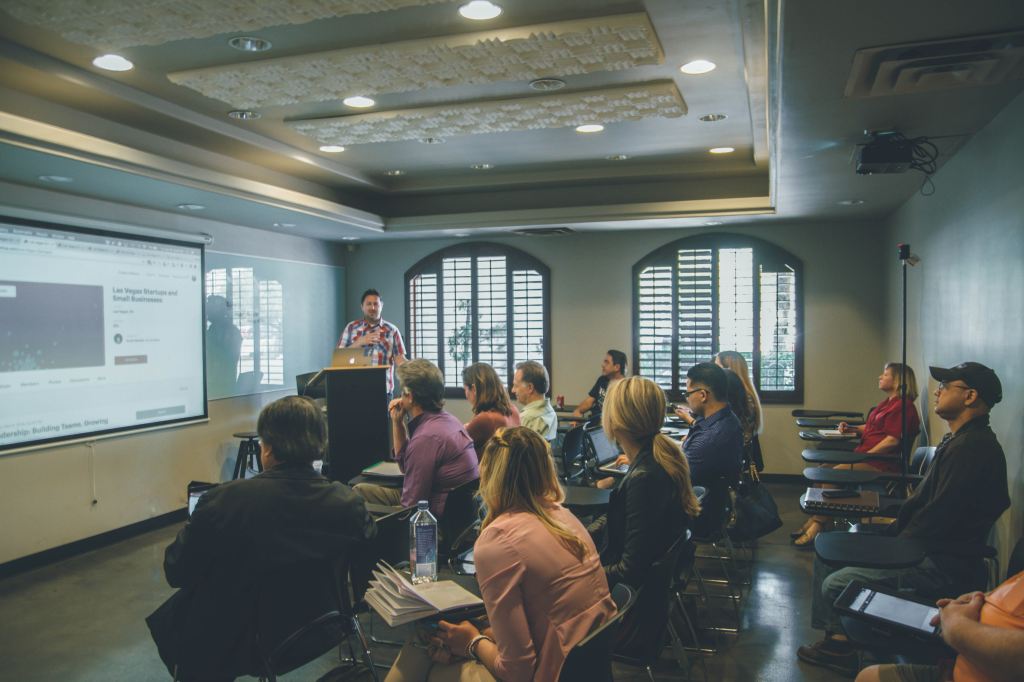
My first session was about English Language Learners and science classes. The presenters were both education professors, and they were talking about ideas they had tried in area classrooms and the results of these efforts. It was a really engaging presentation with some useful material, some of which I knew already, and some of which I didn’t.
What was most striking, though, was just a single phrase that came out of one of the presenter’s mouths. “If student’s aren’t speaking, we don’t get a chance to hear their reasoning, and that’s what teachers really need to hear . . . ”
What happened next was sort of like a conversion experience. An epiphany. Saul on the road to Damascus. (Maybe I’m exaggerating a little.) A few chunks of thinking – massive chunks – think (obscure nerd reference!) Unicron the planet transforming into the giant humanoid that attacks Cybertron at the end of the original animated Transformers movie – started shifting.
Science reasoning! We need to focus on science reasoning! We need to explicitly teach science reasoning! My efforts in vocabulary, writing, reading strategy instruction, and of course science concepts in my science classroom came together under a single, reasonable and perfectly appropriate content literacy umbrella. Science reasoning. It also fit the Claim-Evidence-Reasoning structure that I’ve been toying with a bit. It fit the emphasis I’ve been putting on thinking. I have several signs around my room that declare “It’s about the thinking!” I had my students write “My Thinking Book” on their journals at the beginning of the year. It’s all there, waiting to be unified.
It was like finding a present on my desk. Here was a really useful idea that will help me organize and reinvigorate my science and social studies instruction. An idea that was already there, really, that I hadn’t noticed until the presenter connected some dots for me. To some extent, of course, I already teach science reasoning. I’ve taught scientific method every year for the last five years (of course) as a way to connect science and social studies (since I teach both classes to the same group of students). Of course I’ve been emphasizing the conceptual understanding behind the vocabulary and “content.” Just that little shift in phrasing, though, clarified and connected my goal more explicitly. It links with my use of the Cross-Cutting Concepts from the NGSS. And it makes so much sense.
Now, the question is this: how can I more explicitly teach, assess, and encourage the reasoning?
Back to the point of the professional development, however. Not only did I develop a useful and new understanding of the goal of my teaching, I was also challenged to sit and listen to someone else for long periods. I experienced the relief of being asked to apply that thinking in both effective and ineffective ways with others around me. I was given a puzzle at one session that my small group and I could not solve, even though we were given 15 minutes and were certainly engaged and capable. All of these things helped me empathize better with my students, understand the effects of the instructional choices made by these presenters, and see both sides of the learning task. I think we all need these reminders – even when the learning isn’t completely new or immediately useful.
So I suppose I’m encouraging more professional development . . .



Leave a Reply