I’m a huge fan of speculative fictions – science fiction, fantasy, folk and fairy tales, all of them. It’s a lot of fun to read/watch stories that take me to new places or otherwise encourage me to imagine alternate worlds.
I think Harry Potter is a good example of this. I read the series multiple times; I read the entire series out loud to my son when he was little; my daughter is reading the series right now. Rowling has a gift for inducing wonder. I think a clear example of this is Diagon Alley. The name is a joke, of course, but the whole concept of a secret wizard shopping center is brilliant. In the first book, Harry experiences these wonders for the first time, and many later books link to the discoveries here – Flourish and Blott’s, Ollivander, Gringott’s, Borgin and Burkes, and Knockturn Alley. Flourish and Blott’s is a magical book store, and all of the early books include the annual pilgrimage to this store to buy textbooks for the coming year at Hogwarts. The iron cage of The Monster Book of Monsters in Prisoner of Azkaban is a good example – books that attack each other, and the employees, when people attempt to purchase them. Ollivander’s wand shop is also brilliant – the combination of magical items and their wood housing creates a tool for focusing magic, somehow, and the fact that Harry chooses (or the wand chooses him) a wand that shares a link to Voldemort becomes important throughout the series.
My middle-school son might ask here, “Who cares? What’s the point?” That’s not actually a bad question, really.
I think that we dismiss imagination too much. I think we enjoy these stories – superhero movies, fantasy novels, sci-fi or fantasy TV shows, etc. – but we don’t realize the valuable service they provide. We need these imagined worlds, and we need to explore them. That’s how we create things that don’t exist yet. That’s how we understand things we haven’t lived or seen for ourselves. That’s how we develop a deeper understanding of things, and how we start to imagine possibilities, solutions, connections, extensions, applications. It’s a hugely important thinking tool – perhaps the most important. We need imagination practice.
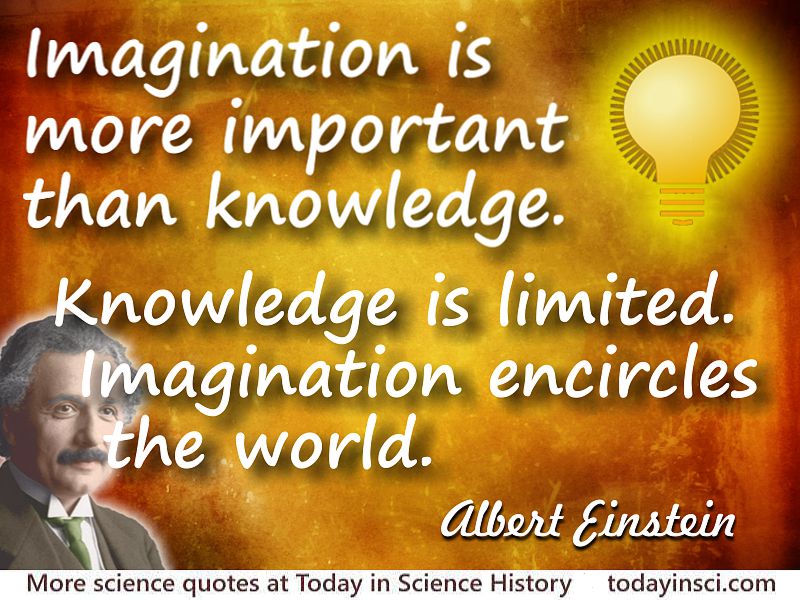
The famous example is Einstein. When Albert Einstein was a kid, he wondered what it would be like to ride a beam of light. That imaginative leap, the moment of “play” (a really important word here), helped him articulate relativity.
Perhaps we need to think about the word. What do we mean by “imagination”? When we say, “use your imagination,” we’re usually talking about mental pictures. Can you “see” it, in your head?
My problem with this is that we don’t stop there. We can imagine much more than the visual. We can imagine the smell of something. The feel of it. We can create a virtual experience, entirely inside our brain, that hasn’t actually happened. In some ways, we can create a fuller “picture” than we could experience for ourselves. (If that sounds weird, just imagine a soccer ball. Then imagine going inside it. Or watch The Magic School Bus episode where they travel inside the kid’s nose . . . )
Here’s the point: we can do almost anything with our imagination. The only limit is what we don’t ask ourselves to try.
I had an experience with an imaginary problem in Philosophy 101, many years ago. “How do we know that we aren’t just a bunch of brains floating in a vat of chemicals in some evil scientist’s lab?” That’s an awkward and incomplete mental picture. The philosopher in question didn’t create a vivid mental picture (probably because that wasn’t the point). That became much more real when a friend of mine took me to see a movie at the discount movie theater in Cleveland. In that movie, a relatively boring guy wakes up inside a chemical soup, inside a pod, plugged into a vast computer network, and realizes that his entire life up to that point has been a computer simulation. (The movie you might have heard of – The Matrix.)
The movie made that philosophical problem much more real. It helped my imagination develop that problem into a situation with real political and social causes. It was a paradigm shift for me – both in movie experiences and in thinking about dystopian futures. That imaginary world sort of turbocharged my imagination.
I like it when movies and books (and TV shows and commercials) challenge my imagination. I like to continue to stretch my ability to imagine possible worlds. I think that’s a really useful skill – in too many ways to count. I think we dismiss video games in this context, too, but they can be really immersive and complex as well. Especially now, with a booming industry creating economic incentives, creative people flocking to the industry to express new perspectives and possibilities, and pressure to innovate and make use of new tools and technologies.
So let’s embrace the imagination. Not literally. Just imagine giving imagination a big hug. Somehow.




Leave a Reply